
My Future Agency

images
M Y F U T U R E

Student employment in Lithuania is about to undergo a significant shift

  • Home
  • Blog
  • Student employment in Lithuania is about to undergo a significant shift
images
images
19
Mar
  • By
  • No Comments

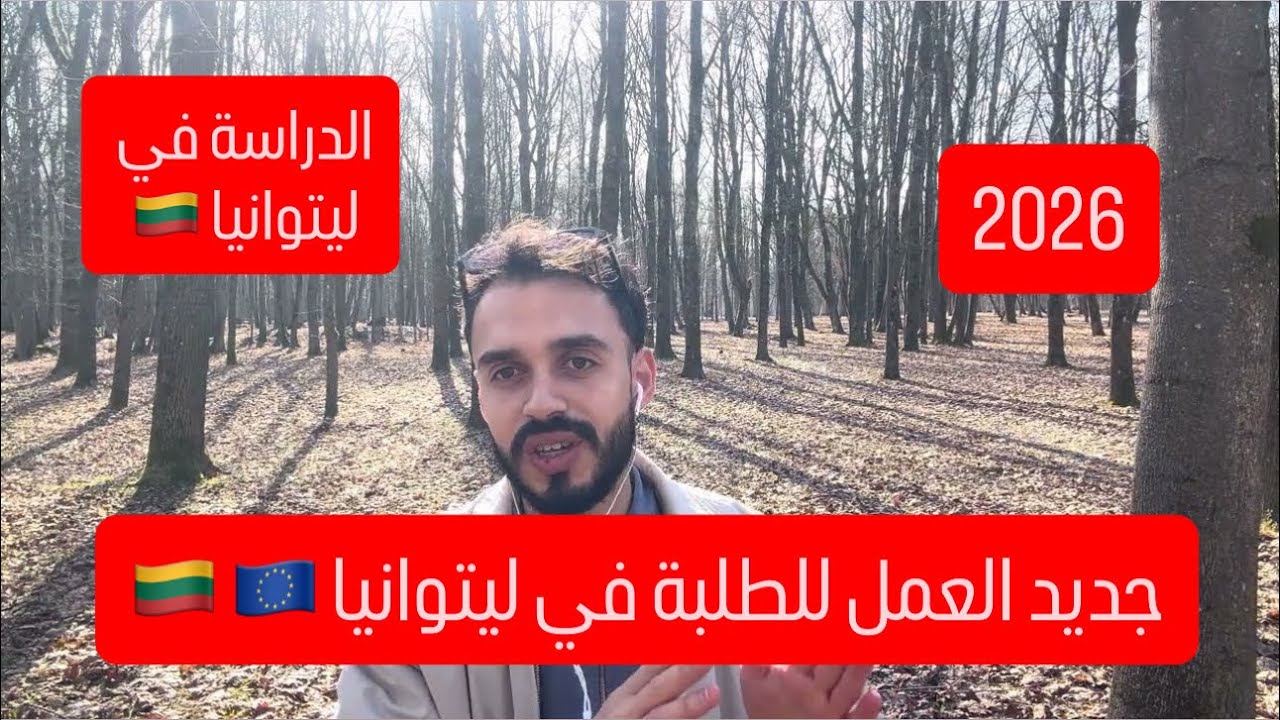
Student employment in Lithuania is about to undergo a significant shift. Starting with the legislation expected to be approved in 2026, the maximum weekly working hours for undergraduate (vacation) students will be reduced back to 20 hours, while master’s students will retain the right to work 40 hours per week. This article explains the evolution of the rules, the reasons behind the upcoming amendment, and what the changes mean for students who wish to combine study and work in Lithuania.

Overview of Student Work Regulations in Lithuania (2020 – 2026)

Previous Regulations (2020)

Since 2020 the Lithuanian labor law distinguished between two categories of students:

  • Undergraduate (vacation) students were allowed to work up to 20 hours per week.
  • Master’s students were permitted to work up to 40 hours per week, the same limit applied to any Lithuanian citizen.

These limits applied regardless of whether the employment was full‑time or part‑time, and they were intended to protect the academic focus of students while still offering a realistic income source.

Upcoming Changes under the 2026 Law

The new legislation, currently being debated in the Lithuanian Parliament and expected to be ratified either later this year or early 2027, proposes the following:

  • Re‑impose the 20‑hour weekly limit for undergraduate (vacation) students.
  • Maintain the 40‑hour weekly limit for master’s students.

The draft explicitly states that the previous temporary increase to 40 hours for vacation students will be revoked, returning the rule to its original 20‑hour cap.

Rationale Behind the Adjustments

Authorities—including universities, the Ministry of Education, the immigration office, and the state at large—have observed a growing trend among bachelor’s students to prioritize work over study. Many attend only a handful of lectures (sometimes as few as 10‑15 % of scheduled classes), which raises concerns about the quality of their education. The proposed amendment aims to:

  • Encourage students to focus on their academic responsibilities.
  • Prevent the perception that higher education is merely a pathway to full‑time employment.
  • Address the difficulty of accurately tracking hours for gig‑type jobs such as food delivery, which are often not recorded in official work hour logs.

Practical Implications for Different Types of Students

  • Undergraduate (vacation) students: Must keep work to a maximum of 20 hours per week. Working beyond this limit could jeopardise their student status.
  • Master’s students: May continue to work up to 40 hours per week, identical to any regular Lithuanian employee.
  • Delivery and other gig‑economy jobs: These positions are not currently counted toward the official hour limit, creating a monitoring challenge for authorities.
  • Contractual employment: If a vacation student signs a contract with an employer, it is advisable to limit the contract to 20 hours per week to stay within the legal framework.
  • Full‑time work (40 hours): Permitted only for master’s students; vacation students should avoid full‑time schedules.

Guidelines for Balancing Study and Work

Students are encouraged to prioritize their studies by attending lectures and completing coursework. If additional income is needed, they can consider:

  1. Working night shifts or on weekends (Saturday, Sunday, and even Friday evenings) while still respecting the weekly hour limit.
  2. Choosing employment that can be clearly documented to avoid disputes with immigration or university officials.
  3. Focusing on contract positions that explicitly state a 20‑hour weekly commitment for vacation students.

Opportunities for Moroccan Students to Study in Lithuania

Since 2020, a dedicated team has facilitated the admission of hundreds of Moroccan students to Lithuanian higher‑education institutions. The service covers a wide range of academic disciplines, all taught in English, and includes comprehensive support from application to visa acquisition.

Fields of Study Available

  • Medicine
  • Informatics
  • Artificial Intelligence
  • Mechanical Engineering
  • Mechatronics
  • Management and other bachelor’s and master’s programmes

Support Services Provided

The organization assists students regardless of their location within Morocco—whether they reside in

Watch the Original Video: